Last Updated: October 9, 2025
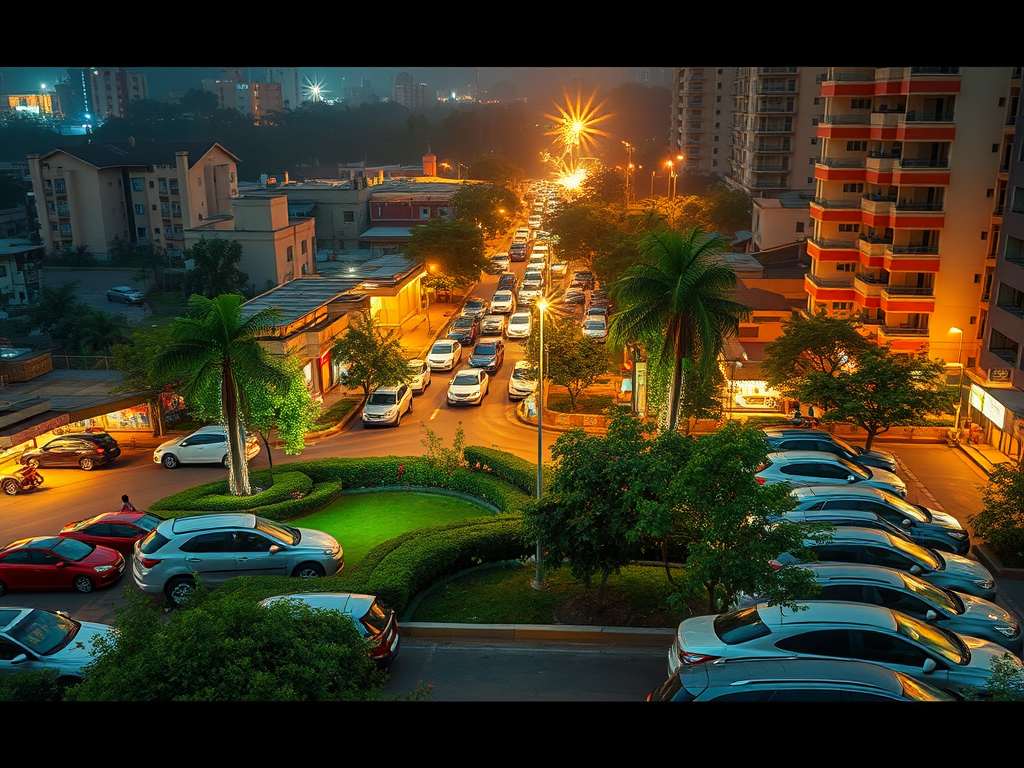
Hey, Chandigarh residents and urban visionaries! Imagine this: Your car, full of potential, sits motionless in a lot or driveway, “parked” for 95% of its life—barely moving an hour a day—while our vibrant city yearns for freer, flowing streets. This is the 95% parked challenge at its heart, an opportunity to reclaim space, breathe life into our neighborhoods, and turn everyday commutes into joyful journeys. Yet, what if we harness this moment to transition from idle moments to a future brimming with efficient, shared mobility? As of October 9, 2025, with festive energy lighting up our paths, let’s celebrate Chandigarh’s spirit and the innovative steps ahead. (For clarity: “95% parked” means vehicles in Indian cities like Chandigarh are stationary 95% of the time, per studies from the Centre for Science and Environment, or CSE—a Delhi-based research group focused on pollution and sustainability.) What’s your vision for overcoming the 95% parked challenge? Share below and let’s inspire each other!

Unpacking the 95% Parked Challenge: Current Opportunities in Tricity
Our journey starts with an empowering truth: In Chandigarh, vehicles remain parked 95% of the time, opening doors for creative solutions amid our city’s growth toward 2 million residents by 2031. Recent October 2025 insights spotlight parks filled with cars, especially in southern sectors and rehab colonies (rehabilitation colonies—government housing for displaced low-income families), where we can unite to protect green belts and play areas—creating safe havens for kids and fostering equity in lower-income communities. Meanwhile, Mohali markets like 3B1, 3B2, and Phase 5 pulse with festive rush energy, inviting us to enhance management, repair roads, and streamline flows to transform shopping into seamless experiences.

Voices rise with passion across sectors: Calls to improve lot operations, revitalize underground spaces in Sector 17 with functional lifts for seniors, and organize delivery zones in Sector 40. At PGI hospital (Post Graduate Institute of Medical Education and Research—a major government hospital), renewed contracts can inspire smoother access and safety. Sector 11 residents recently rallied with SSP Traffic (Senior Superintendent of Police for Traffic) to champion better PGI parking, one-way streets, rubber dividers, and positive enforcement. In Panchkula, the MC (Municipal Corporation—the local governing body) has boldly waived paid parking in Sectors 8, 9, and 10, clearing ₹1.25 crore in dues—paving the way for fresh, community-driven approaches.

Social media hums with shared dreams: October 2025 X posts energize discussions on railway station vibrancy amid rain and construction, where we can innovate for fairer 10-minute drops. Airport lots invite collaborative vendor solutions, and stories of unity—like overcoming disputes—remind us of our collective strength. Even flats with scooters on footpaths spark forum ideas for better organization. As prosperity ignites car ownership (boosting innovation and growth), this 95% parked opportunity invites us to build pricier, slower commutes into efficient, empowering ones—especially uplifting low-income rehab areas, where space can become a source of joy.
Transitioning from 95% Parked: Practical Solutions Amid Challenges
The transition story? Let’s empower the shift from 95% parked idleness to high-utilization mobility via shared rides like Ola, Uber, and e-rickshaws (8-10x efficient), potentially cutting demand 20-30% per the 2041 CMP (Comprehensive Mobility Plan—a government blueprint for transport in Chandigarh)—reclaiming space for thriving greens.
Short-Term Wins: Empower no-parking in greens with positive incentives, subsidize e-rickshaws via apps for 2-4 passengers per trip (50% utilization boost). Smart City e-carts for last-mile energize idling reduction. Launch AI smart parking pilots across 89 sites for real-time apps, slashing circling 30%—with ₹500 citywide monthly passes (up from ₹420 single-lot, 5,000 issued monthly). FASTag for seamless entries inspires smoother flows. Enhance operations via collaborative audits, as urged in FOSWAC (Federation of Sectors Welfare Associations Chandigarh—a resident group) meets—building trust and efficiency. Festive guidelines like traffic advisories radiate promise for spreading demand, and October rushes inspire us to strengthen enforcement.

Medium-Term: Deploy 100 e-buses on expanded routes; Chandigarh Metro Phase 1 aims for 2034 completion with 30+ stations and edge park-and-ride for external influx—shifting 20-30% to high-occupancy modes. But opportunities for progress shine: Costs at ₹25,000 crore (with ongoing planning), no DPR (Detailed Project Report—a technical document for approval) yet submitted, but recent pushes like MP Manish Tewari’s October 8, 2025, meeting with Union Minister Manohar Lal Khattar offer hope for a “Greater Chandigarh Region” model, turning steps into leaps forward. Upgrade lots for user-friendliness—balancing equity for rehab areas.
Long-Term: Scale autonomous shared EVs for 80-90% utilization, trimming fleets 40%. CMP’s bypasses and green corridors divert traffic, targeting 5-7x per capita use (This refers to the Comprehensive Mobility Plan (CMP) for Chandigarh, a government blueprint for transport up to 2041 developed by RITES (Rail India Technical and Economic Service, a consultancy). It proposes bypass roads (alternative routes around congested areas to reroute heavy traffic) and green corridors (dedicated paths for non-motorized transport like cycling and walking) to ease city-center flow. The “5-7x per capita use” aims to boost efficiency—vehicles or systems serving 5-7 times more people per capita than now, reducing idle time through shared, high-occupancy options. While visionary for sustainability, it’s interpretive; the CMP focuses on mode share (e.g., 70% public/NMT by 2041) rather than exact “5-7x,” risking overpromise amid cultural resistance to non-motorized shifts. For policymakers, pair with pilots to test real gains.). Expand the 7.5-km Green Non-Motorised Corridor for bikes and walks, lowering emissions—and let’s embrace cultural shifts to make non-motorized options a celebrated choice. Promote carpooling incentives and shared mobility apps to encourage fewer vehicles per household, funding public transport upgrades. Build extensive cycling networks integrated with trains, achieving high non-motorized mode shares and health benefits worth billions. Implement community-based parking management to cut traffic and boost bus ridership. Encourage voluntary off-street parking proofs for new registrations to limit on-street overflows.

Leaders Inspiring the 95% Parked Transition
Officials can ignite the shift: The UT Administrator or Punjab CM Bhagwant Mann riding e-buses mirrors inspiring examples of leaders using public transport to promote reliability. RWAs (Residents Welfare Associations—local community groups) and FOSWAC (Federation of Sectors Welfare Associations Chandigarh—an umbrella organization representing about 80 resident welfare associations (RWAs) from different neighborhoods who meet monthly to push for better services like parking and infrastructure) advocate with passion—leaders joining could curb 80% external influx via fees and shares, addressing equity in vulnerable areas through inclusive policies. Let’s celebrate figures like Nitin Gadkari, whose electrification drives energize our nation’s mobility dreams.
Global Transitions: Lessons for Chandigarh’s 95% Parked Fix
Prosperity needn’t amplify idleness: Promote carpooling incentives and shared mobility apps to encourage fewer vehicles per household, funding rapid transit systems with high trip shares. Develop dedicated cycling paths integrated with trains, yielding high cycling mode shares and health benefits worth billions in savings. Implement community-based parking management to reduce traffic volumes and reinvest in bus improvements. Encourage voluntary off-street parking proofs to limit low-occupancy trips.
Adapt locally: Pilot carpool incentives in dense sectors, revenues for metro. Ditch minimum parking rules to free land—tailored for India’s context like Delhi’s odd-even parallels or Chennai’s Metrolite (a light rail system for medium cities).
Bold Visions: Transit-Only and 24/7 for the 95% Shift
Restrict buildings to transit? (This means making public offices and buildings accessible only through public transport like buses or metro, with no on-site parking for private vehicles to encourage shared mobility.) Dedicated bus lanes (priority roads for buses to speed up public transport) and superblocks (large car-free zones combining multiple city blocks for pedestrians, cyclists, and green spaces) reclaim streets, dropping NO2 25-33%. (NO2 is nitrogen dioxide—a harmful air pollutant from vehicle exhaust that causes respiratory issues like asthma; “dropping NO2 25-33%” refers to reducing its levels by 25-33%, improving air quality.) In Chandigarh, metro links could ensure equity (fair access for all, especially low-income groups who can’t afford cars).
Go 24/7 with shifts: (This means operating public offices 24 hours a day, 7 days a week, using shift systems to keep services running without overworking staff—e.g., dividing the day into periods where teams rotate for coverage, allowing rest and efficiency. 8-hour rotations cut peaks 20-30% (reducing busy-hour crowds by 20-30%), enabling off-hour access via buses—proven in U.S. DMVs (Department of Motor Vehicles—offices for licenses) and India’s hospitals, with AI queries (Artificial Intelligence for handling inquiries like chatbots). Barriers like staffing costs exist, but pilots could test feasibility in high-demand spots like PGI.

Wrapping the 95% Parked Transition: Chandigarh’s Smarter Future
Chandigarh’s 95% parked challenge is real, but with 2025 pilots, metro pushes, and inspired shifts, we can transition to efficient mobility. From filled parks to utilized streets, equity-focused changes will benefit all, aligning with NUTP (National Urban Transport Policy—a 2006 framework for sustainable Indian cities) and AMRUT (Atal Mission for Rejuvenation and Urban Transformation—a program for urban infrastructure). Let’s celebrate the Chandigarh Traffic Police’s 22 alternative parking sites for Diwali, turning rush into radiance. How to adapt cycling paths for Mohali? Vote: e-buses or lanes? Comment.


Leave a Reply